
Wheelchair Tie-Down
& Restraint System
Four-point chair and occupant securement
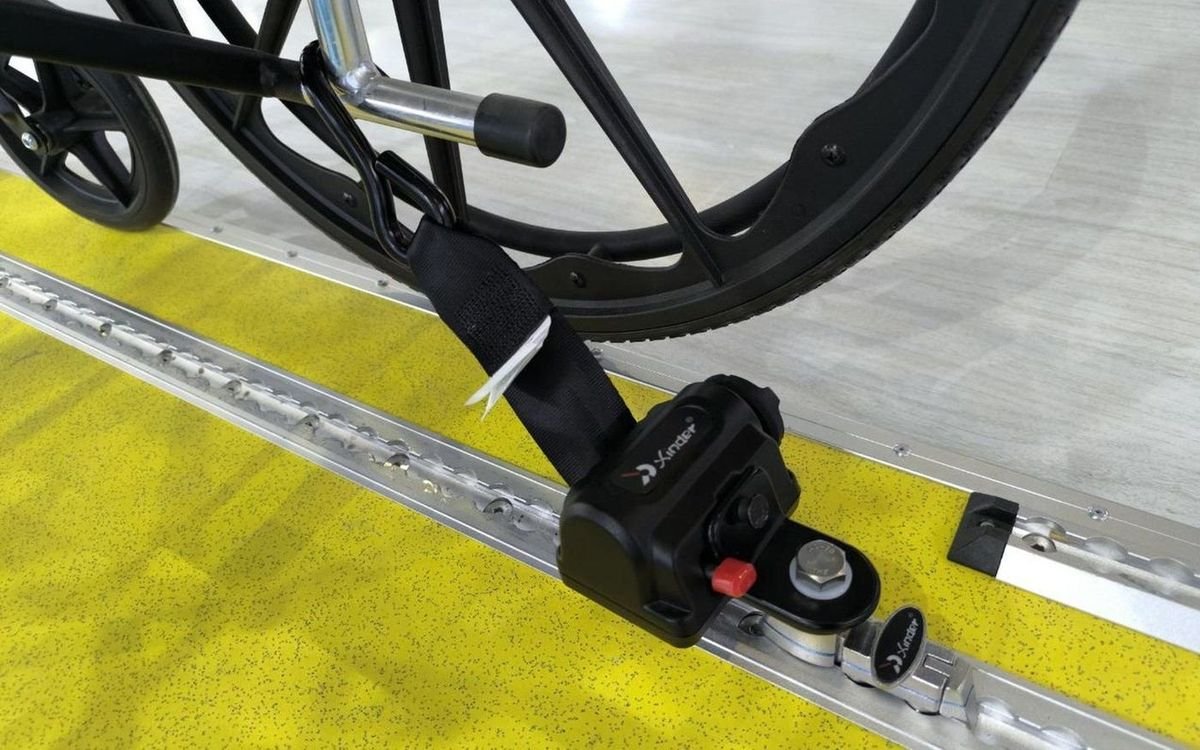
A four-point securement system that anchors a wheelchair to the vehicle floor. In a collision or a sudden stop it routes the chair’s loads into the floor structure instead of the occupant, and self-tensioning belts lock the chair without tools. Three floor anchorage types cover surface, flush and single-point installations.
Or email info@velomoveaccess.com
Test reports are available on request. Market-specific approval remains the responsibility of the vehicle converter.
Three Steps to a Secured Chair
The system separates the chair from the occupant’s forward forces and sends them into the vehicle floor, so the chair and the person in it move as one unit.
Anchor
A track or round base is fixed to the vehicle floor at the chair’s parking position. The three anchorage types differ only in how that fixing sits in the floor.
Click In
Four belt fittings lock into the anchorages. Slide-and-click fittings engage in one movement, so a chair can be secured and released without threading belts by hand.
Tension
Mechanical automatic tightening belts take up the slack and hold the chair square to the floor, which cuts the waiting time at the kerb.
Pick the Fixing That Fits the Floor
Each fitting is supplied with one of three floor anchorages. The choice is driven by the floor build-up of the vehicle and by how flat the finished floor has to be.
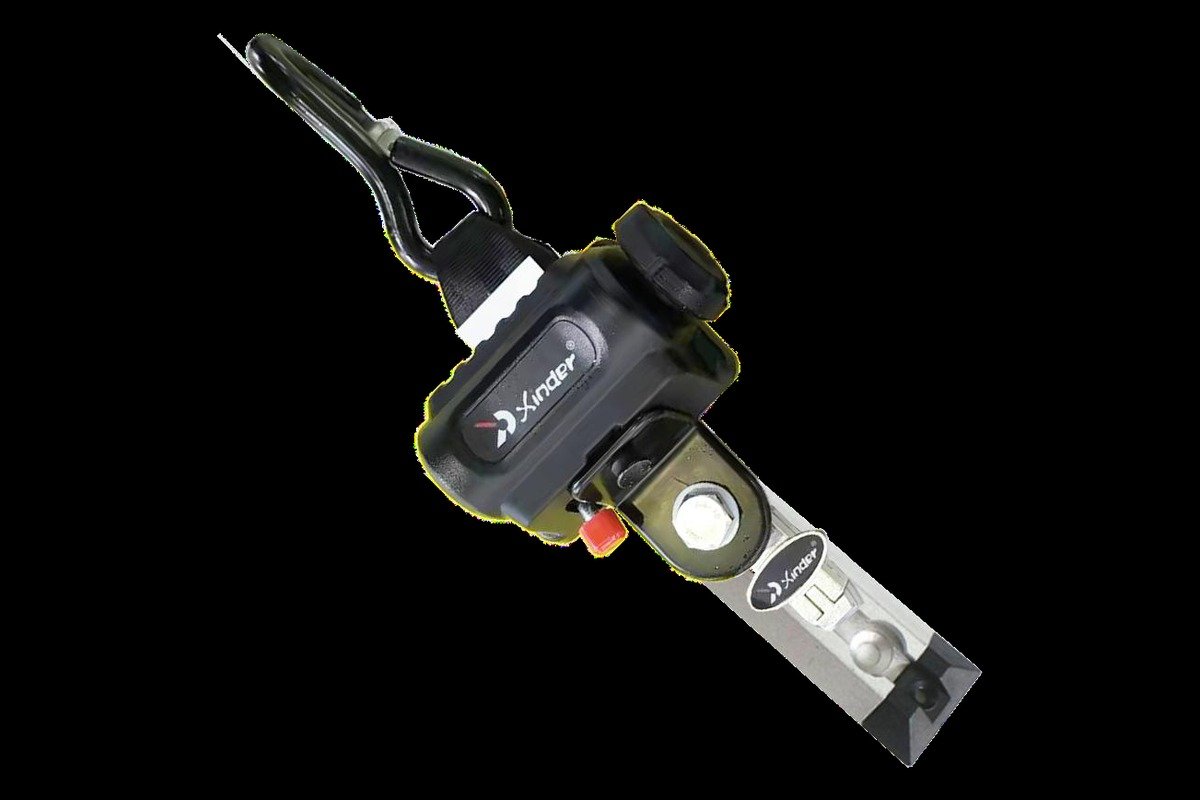 Type 1
Surface track
X-801A-1
The track is laid on the floor and drilled into place, so no floor build-up has to be cut away. A practical retrofit choice for existing vehicles.
- Track floor anchorage with a surface track
- Fix by drilling straight through the track
- Installed track stands about 15 mm above the floor
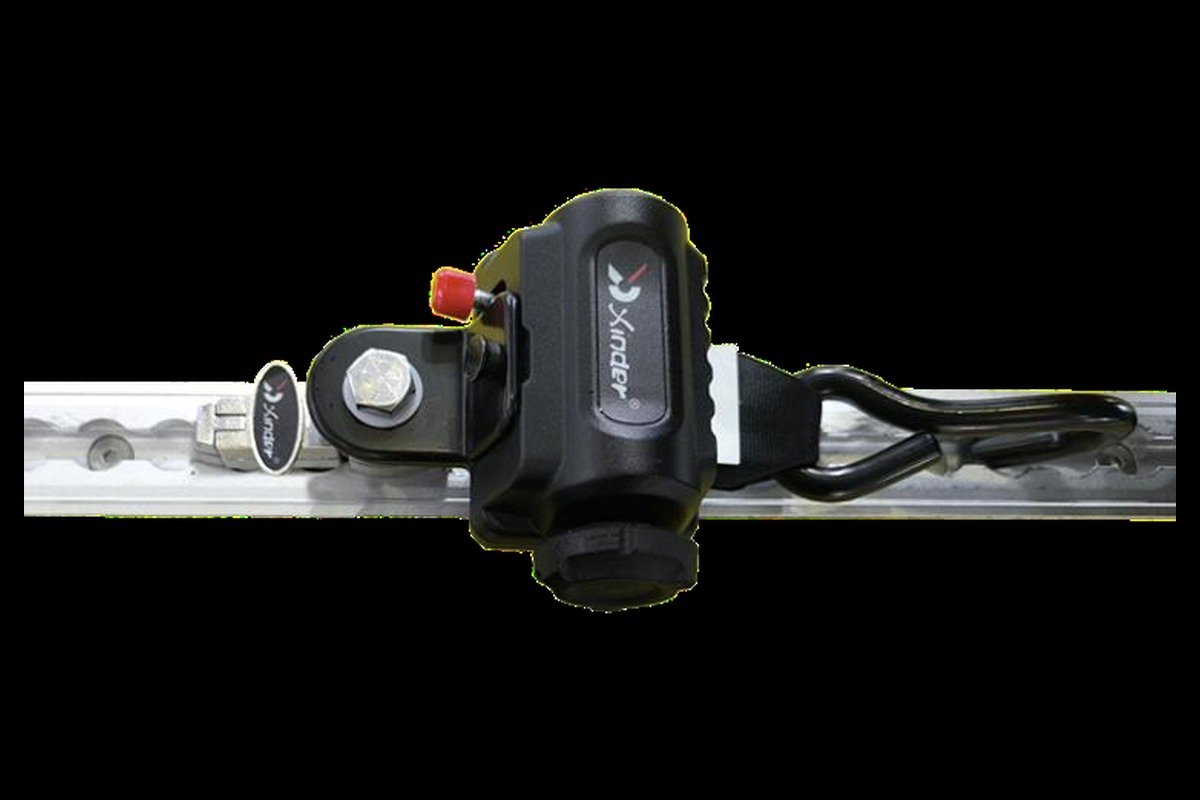 Type 2
Recessed cupped track
X-801A-2
A groove is cut into the floor, the cupped track is set into it and then drilled down. The finished floor stays almost flush, which suits vehicles where a clear aisle matters.
- Track floor anchorage with a cupped track
- Mounting groove cut into the floor first
- Track finishes almost flush with the floor
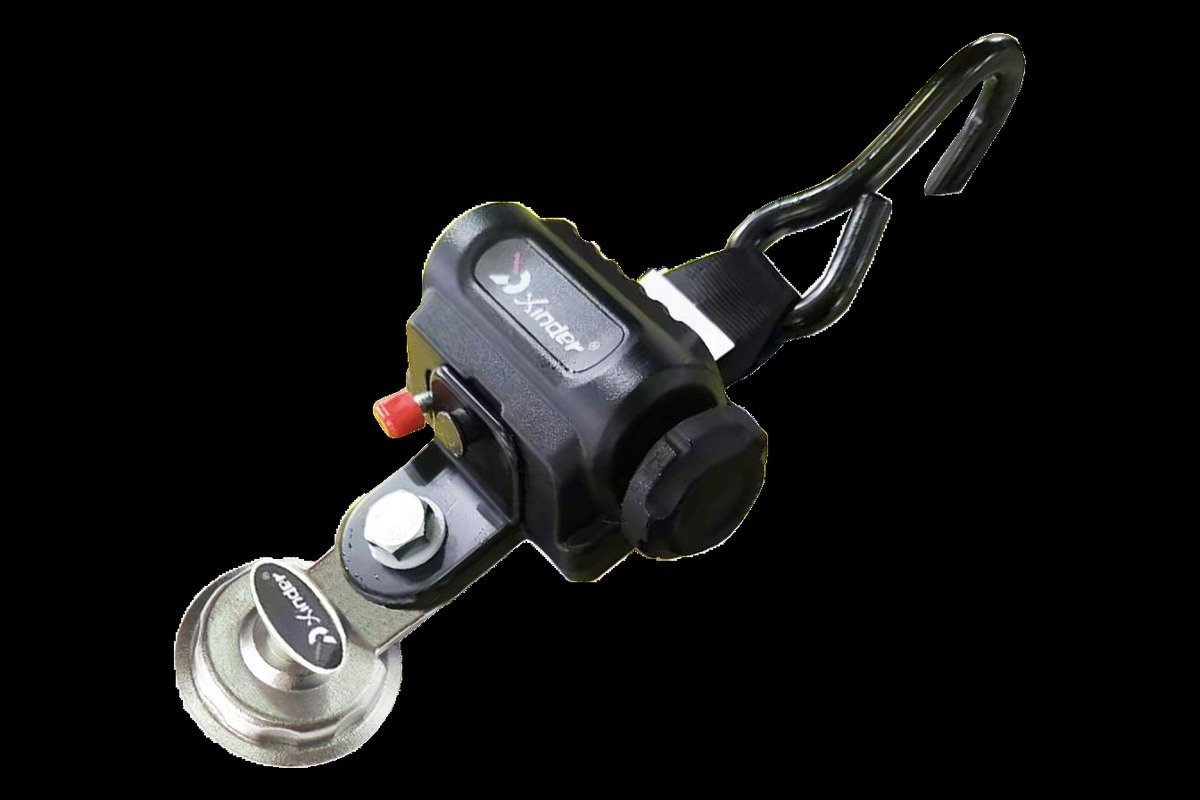 Type 3
Round mounting base
X-802-1
A round hole is cut in the floor and the base is set into it. Fittings then slide and click into the base, so chairs can be locked and released without threading a belt by hand.
- Slide and click anchorage
- Round mounting base set into a round floor hole
- Single-point fixing for compact floor layouts
Built for Daily Wheelchair Transport
Hardware designed around the routine of a taxi, a school run or a shuttle service: fast to use, hard to get wrong.
Mechanical Auto-Tension
Belts tighten themselves as the fitting is locked, so the operator does not judge the tension by hand.
Lap Belt as Standard
A lap belt comes with the kit; a shoulder belt is available as an option for occupant restraint.
Fast Turnaround at the Kerb
Four-point securement in a single action keeps vehicle waiting times short on scheduled routes.
Sealed Tracks
Rubber seals close the track when no fitting is engaged, keeping grit and dirt out of the channel.
Aluminium Alloy Cover
A black aluminium alloy cover keeps the fitting light and strong, with good heat conduction.
Corrosion Protection
Black electrophoresis plus spray coating: adhesion and scratch resistance, with salt spray testing up to 504 hours.
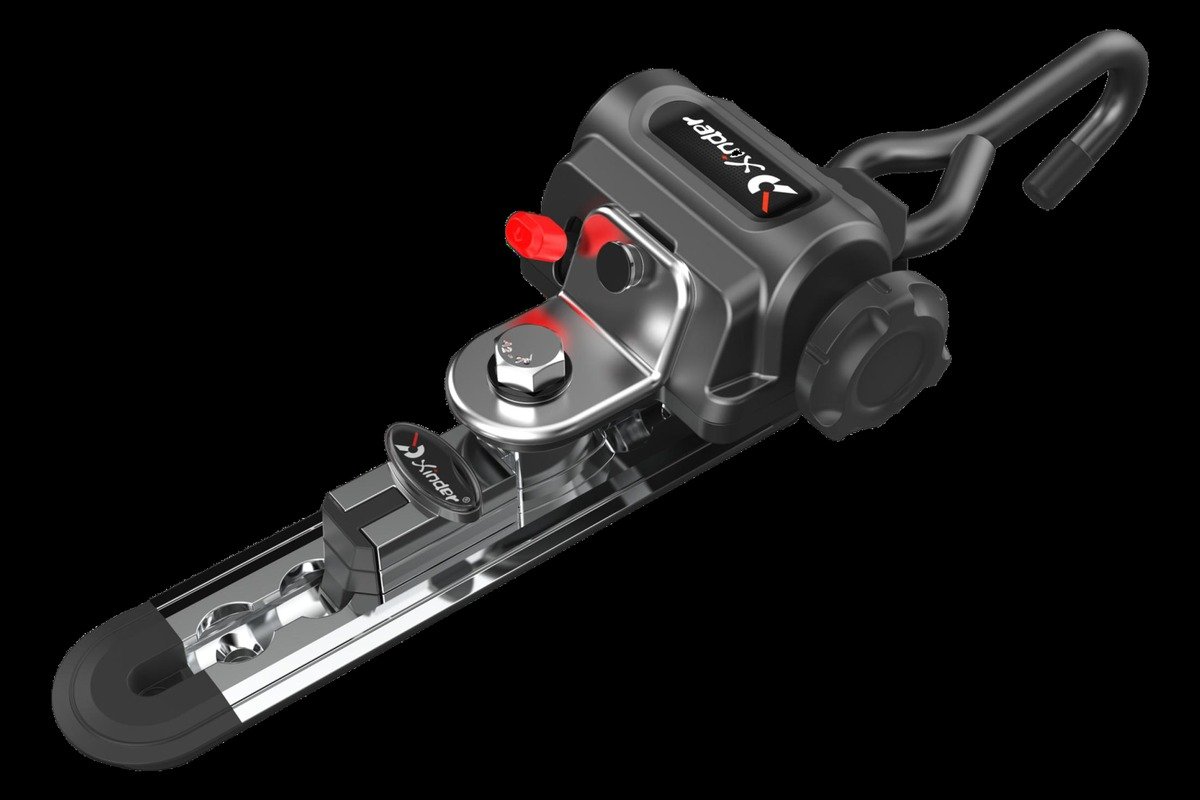
Built to Survive a Vehicle Floor
A fitting lives where feet, wheels and cleaning chemicals meet. The materials are chosen for that, not for the showroom.
- Cover: black aluminium alloy — lightweight, high strength and good thermal conductivity.
- Label: PVC with high adhesion and ageing resistance; it is not expected to peel, yellow or harden.
- Finish: black electrophoresis plus spray coating for adhesion and scratch resistance; corrosion performance raised from 200 to 360 hours.
- Salt spray: coating tested to 504 hours.
Wheelchair Tie-Down Specs: Track, Belt
Configuration, fixing method and material data for the restraint system.
| Configuration | Four-point wheelchair and occupant securement |
| Anchorage Types | X-801A-1 surface track / X-801A-2 recessed cupped track / X-802-1 round base |
| Fixing Method | Track drilled to the floor, track set into a cut groove, or base set into a round hole |
| Track Height Above Floor | About 15 mm on the surface track; almost flush on the recessed cupped track |
| Belts | Lap belt standard, shoulder belt optional |
| Belt Tensioning | Mechanical, automatic |
| Track Sealing | Rubber seals close the track when not in use |
| Cover Material | Black aluminium alloy |
| Finish | Black electrophoresis plus spray coating, salt spray tested to 504 hours |
| Testing | Tested to ECE R107 and ISO 10542-1:2012; reports on request |
| Ordering | Specified by anchorage type and belt configuration; floor layout drawings help us confirm the fixing |
Wheelchair Restraint Questions
Securement, anchorage and certification answers for converters and fleet operators.
What does a wheelchair restraint system do?
It secures the wheelchair and the person in it to the vehicle floor. In a collision or sudden stop the system separates the occupant’s forward forces from the chair by directing the chair’s loads into the floor, and the belts hold the chair in position for the whole journey.
Which of the three anchorage types should I choose?
X-801A-1 is the simplest retrofit: the surface track is laid on the floor and drilled down, finishing about 15 mm proud. X-801A-2 needs a groove cut in the floor but finishes almost flush, which suits vehicles where a level aisle matters. X-802-1 uses a round base set into a round hole for single-point fixing.
Is the system crash tested?
It is tested to ECE R107 and ISO 10542-1:2012. Test reports and compliance documents are available on request. Whole-vehicle approval stays with the converter, because the result also depends on how the anchorage is built into the floor.
Can it be used together with a wheelchair lift?
Yes. The lift brings the occupied chair into the vehicle and the restraint takes over for travel. Anchor positions should be checked against the wheelchair’s wheelbase and the floor layout, especially where the lift platform parks.
Are the belts included?
A lap belt is standard. A shoulder belt is optional, and the fixing kit is matched to the anchorage type you order.
Related Products
Lifts that bring the chair in, and the restraint that keeps it there.
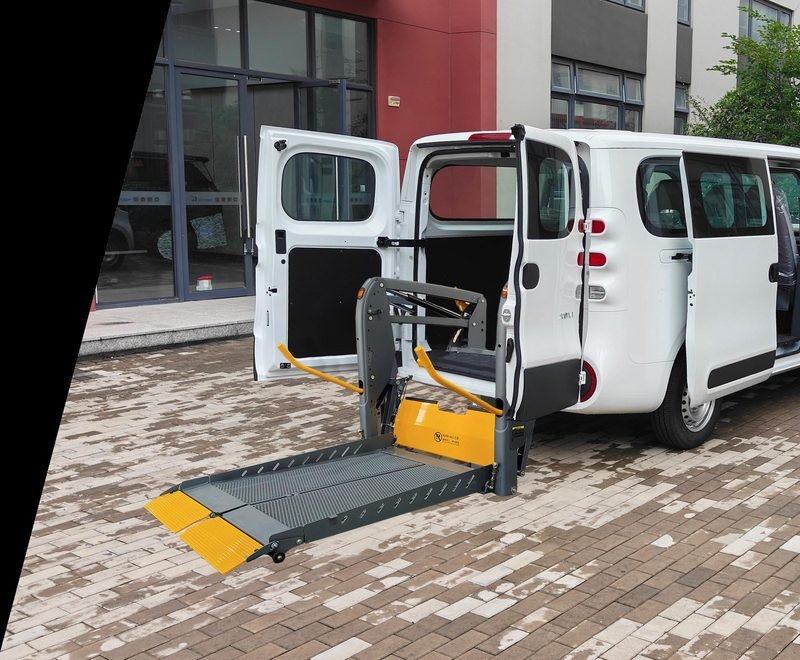
WL-D Dual-Arm Lift
Dual-arm hydraulic wheelchair lift in folding, split and integrated platform versions.
View Product
Mini-UVL 350 Lift
Under-vehicle lift with a 90 mm slim frame, stowed hidden below the floor.
View Product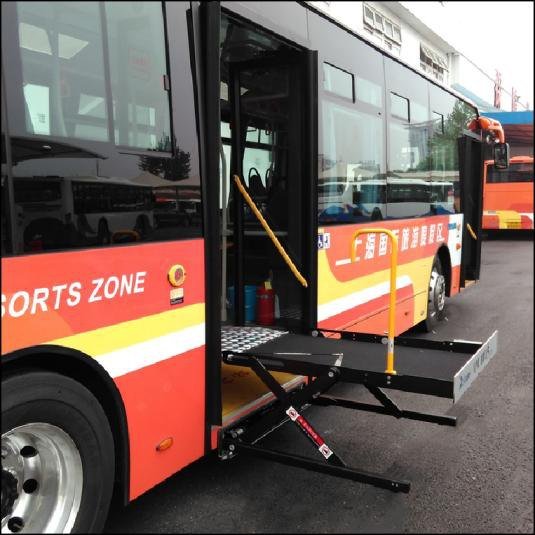
Hydraulic Platform Lift
Platform lift for van side and rear doors where a fixed platform is preferred.
View ProductTell us the floor layout and we will confirm the fixing
Send the vehicle model, floor build-up and chair position. We reply with the anchorage type, belt configuration and a quote.